The Japanese Secret to Longevity: A Gentler Approach to Eating, Moving, and Living Well
What if caring for your health did not begin with a stricter diet, a punishing workout, or another complicated morning routine?
What if it began with a more attentive meal, a daily walk, and small habits you could realistically repeat?
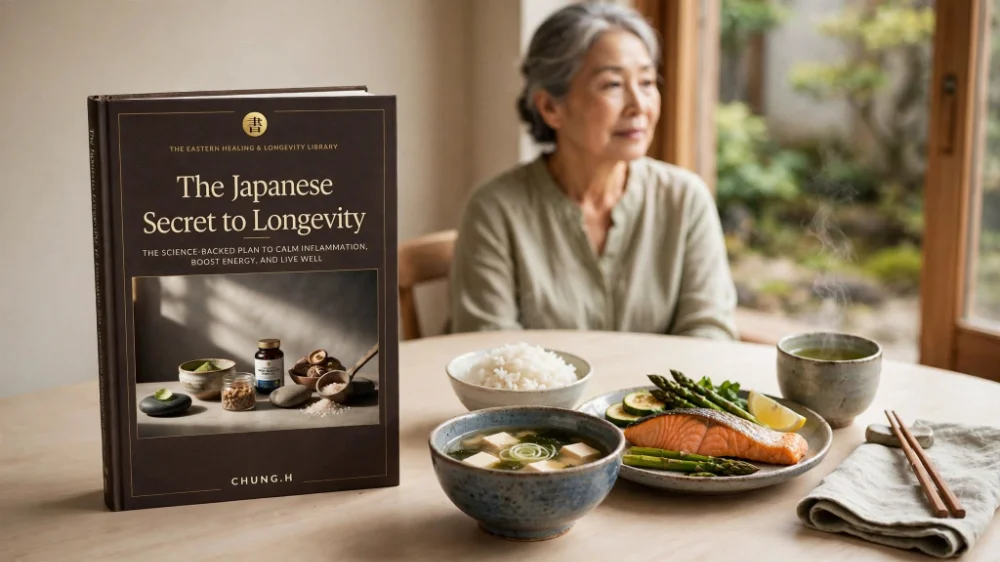
That is the central invitation of The Japanese Secret to Longevity: The Science-Backed Plan to Calm Inflammation, Boost Energy, and Live Well, by H Chung, part of the Eastern Healing & Longevity series.
Drawing on Japanese food traditions and everyday wellness practices, the book presents a different perspective on healthy living: less intensity, more consistency. Rather than searching for one extraordinary ingredient or an overnight transformation, it brings attention back to the ordinary choices that shape a day.
Beyond the Search for a Miracle
Wellness advice can make healthy living feel like an endless correction project. There is always another food to eliminate, another supplement to consider, or another routine to master.
This book takes a gentler direction. Its description connects nutrition, movement, rest, and mindset within a practical approach to daily life. The emphasis is not on doing everything perfectly, but on creating a rhythm that feels possible to maintain.
That distinction matters to the book's overall message. A habit is not presented as a test of discipline. It becomes something to explore, adapt, and return to.
Eating with Attention: Hara Hachi Bu
One of the concepts introduced in the book is Hara Hachi Bu, commonly expressed as eating until you are about 80 percent full.
Within the guide's approach, this is an invitation to pay attention at mealtimes rather than follow an elaborate set of food rules. It offers a starting point for reflecting on pace, appetite, and the difference between feeling satisfied and continuing to eat automatically.
The percentage is best understood as a traditional guiding idea, not a precise measurement or a universal dietary prescription. The broader theme is a more thoughtful relationship with eating.
Looking Beyond Restaurant Sushi
The book also introduces readers to ingredients associated with Japanese food traditions, including green tea, miso, natto, sea vegetables, and sources of omega-3 fats.
Its culinary focus extends beyond discovering unfamiliar ingredients. According to the description, the guide includes straightforward substitutions and shortcut recipes for readers who do not live near a specialist Japanese grocery store.
That practical emphasis makes the kitchen an accessible place to begin. Readers can explore the food ideas without feeling that they must replace every ingredient in the cupboard or recreate an entirely different way of life.
The useful question is not, "How can I eat perfectly?" It is, "Which of these ideas could fit into the meals I already prepare?"
Movement and Rest Without the Punishment
Daily walking, sleep routines, and ofuro, or Japanese-style soaking baths, feature in the book's discussion of everyday well-being.
These practices support its larger editorial theme: caring for yourself need not revolve around exhausting exercise or constant self-optimization. The guide encourages readers to consider how movement and rest might fit together within an ordinary day.
A walk can be explored as part of a routine rather than another performance target. An evening ritual can be considered a transition toward rest rather than another checklist to complete.
The book's appeal lies partly in this change of tone. It makes space for an approach to wellness that feels less adversarial.
Ikigai: Making Room for Meaning
Alongside food and physical routines, the book introduces ikigai through the theme of purpose.
This gives its approach a wider focus than nutrition alone. It invites readers to consider not just what they eat or how they move, but what makes daily life feel worthwhile.
That might prompt reflection on relationships, creative work, learning, or activities that deserve more attention. Within the book's framework, meaning belongs in the conversation about living well rather than being treated as a separate concern.
Kaizen: Starting Smaller
The description places kaizen, the principle of continuous improvement, at the heart of the book's practical approach.
Instead of demanding a complete lifestyle overhaul, the guide offers a One-Day Jumpstart and a 7-Day Micro-Habit Challenge. These provide structured entry points for readers who want something more concrete than general inspiration.
The attraction is straightforward: begin with a manageable change, make room for it, and build gradually.
This approach also leaves space for adaptation. A routine that looks appealing on paper may need adjusting to suit work, family responsibilities, food preferences, or available time. Flexibility is part of making the ideas usable.
A Thoughtful Note About the Health Claims
The title and description emphasize inflammation, energy, and longevity. Those are substantial health claims, and the description alone does not establish how strongly the book's individual recommendations are supported.
It would therefore be misleading to present its foods or routines as guaranteed ways to reduce inflammation, resolve fatigue, relieve joint pain, or extend life. Likewise, phrases such as "gut-healing" or claims that a traditional practice outperforms intensive exercise should not be treated as demonstrated conclusions without examining the relevant evidence.
The book can be introduced more accurately as a guide that brings Japanese-inspired practices into a structured wellness plan, rather than as a promise of specific medical results.
An Invitation to Build a More Livable Routine
The most engaging idea in The Japanese Secret to Longevity is not the discovery of a single secret. It is the possibility of approaching health with less urgency and more attention.
Through food traditions, gentle movement, reflection, and small-step plans, H Chung invites readers to reconsider what a sustainable routine might look like.
For readers drawn to Japanese-inspired wellness and practical habit-building, the book offers a starting point for exploration: not a demand to change everything, but an invitation to begin thoughtfully.
The Japanese Secret to Longevity: The Science-Backed Plan to Calm Inflammation, Boost Energy, and Live Well is by H Chung and belongs to the Eastern Healing & Longevity series.http://chungbooks.fr
This article is based on the supplied book description, not an independent review of the full manuscript or its scientific references.