We hear a lot of advice about eating these days. Count your calories. Avoid certain foods. Follow a strict routine. Eat this, never eat that. Even something as simple as sitting down for a meal can begin to feel like another task to manage.
But what if a healthier relationship with food started with something less complicated?
What if we paid a little more attention to how we eat, rather than constantly worrying about what we should or shouldn't eat?
This is one reason I find Italian food culture so interesting. Not because Italians have discovered a secret formula for perfect health, but because many traditional Italian meals offer a different way of thinking about everyday food.
1. Food is more than nutrition
In many Italian households, meals have traditionally been about more than filling an empty stomach. They can be a moment to pause, talk, share stories, and reconnect with family or friends.
Of course, modern Italian life is diverse, and not everyone has the time or opportunity to eat this way. Still, the idea is worth considering.
When we eat while answering emails, scrolling through our phones, or rushing between responsibilities, food can become something we barely notice.
Occasionally putting everything aside and giving a meal our attention can make eating feel less mechanical. We may notice flavors, textures, and our own sense of satisfaction more clearly.
It doesn't require an elaborate dinner or an hour of free time. Even one unhurried meal a day can be a small change worth trying.
2. Simple ingredients can make everyday cooking easier
You don't need an impressive collection of kitchen gadgets or dozens of ingredients to prepare a satisfying meal.
Italian cooking offers plenty of examples of how a few everyday ingredients can work beautifully together: tomatoes, beans, seasonal vegetables, olive oil, herbs, bread, pasta, and grains.
A bowl of pasta with vegetables, a simple bean soup, or a salad made with ingredients that are currently in season can be both practical and enjoyable.
The point isn't to copy every Italian recipe or assume that all traditional dishes are automatically healthy. Ingredients, preparation methods, portions, and individual needs all matter.
What I appreciate is the emphasis on making ordinary ingredients useful and enjoyable, rather than treating every meal as a culinary performance.
3. Let the seasons inspire your shopping
Shopping with the seasons can make cooking more interesting and sometimes more economical, depending on where you live and what's available.
Instead of planning every meal around a rigid list of ingredients, you might begin with a few questions:
What's fresh and available this week?
Which vegetables could I use in more than one meal?
What can I prepare today that will also make tomorrow's cooking easier?
This approach can reduce unnecessary complexity. A pot of vegetable soup, for example, can become part of several meals, while beans or cooked grains can provide a useful starting point for something different the next day.
You don't need to shop at an Italian market or buy expensive imported ingredients. The principle can be adapted to almost any country and budget.
4. Eating well doesn't have to mean following a strict diet
One of the most appealing aspects of a Mediterranean-style approach to eating is its emphasis on an overall pattern rather than a single supposedly miraculous food.
Research has associated Mediterranean-style dietary patterns with several favorable health outcomes, although the evidence varies by outcome and does not guarantee individual results. These patterns typically emphasize vegetables, fruits, legumes, whole grains, nuts, and unsaturated fats, with variations in the amounts of fish, dairy, meat, and other foods.
But there's an important distinction between learning from a dietary tradition and turning it into another set of rigid rules.
Italian food culture is not one uniform diet. Regional cuisines differ, family habits differ, and contemporary eating patterns differ from historical ones.
Nor does a Mediterranean label automatically make every meal nutritious. A balanced approach still depends on the foods we actually eat and our individual circumstances.
For me, the useful lesson is to focus on sustainable habits instead of searching for a perfect diet.
5. Bring back the pleasure of eating
Food is nourishment, but it is also pleasure, memory, culture, and connection.
A recipe might remind us of a grandparent. A familiar soup can bring comfort on a difficult day. Sharing a meal can strengthen a friendship in ways that have little to do with nutritional information.
When every meal becomes a test of discipline, we risk losing some of that enjoyment.
This doesn't mean ignoring nutrition or pretending that food choices never matter. It means making room for both nourishment and pleasure without allowing guilt to dominate every decision.
Sometimes, a good starting point is simply to cook something you enjoy, sit down when you can, and give yourself permission to appreciate it.
6. Create your own version of the Italian table
You don't have to live in Italy to borrow a few ideas from its food traditions.
You could try one or two small changes this week:
Prepare a simple meal from ingredients you already have.
Sit down to eat without looking at your phone.
Invite a friend or family member to share a meal when circumstances allow.
Choose one seasonal ingredient and find two ways to use it.
Make a flexible plan for a few meals instead of trying to organize every detail.
Notice which habits make cooking and eating easier, then keep the ones that work for you.
None of these ideas needs to become another obligation. The goal is to make everyday eating feel more manageable, enjoyable, and sustainable.
And if food is a source of anxiety, distress, or disordered eating, strict rules and self-imposed challenges may not be helpful. Compassionate, individualized support from an appropriately qualified professional can be a better starting point.
A final thought
Perhaps one of the most valuable lessons we can take from Italian food culture is that eating well doesn't have to be a constant battle between discipline and temptation.
It can also involve rhythm, simplicity, flexibility, and the pleasure of sharing food with others.
We don't need to romanticize Italy or imagine that everyone there eats slowly around a family table. We can simply look at the traditions that interest us, consider what makes sense, and adapt those ideas to our own lives.
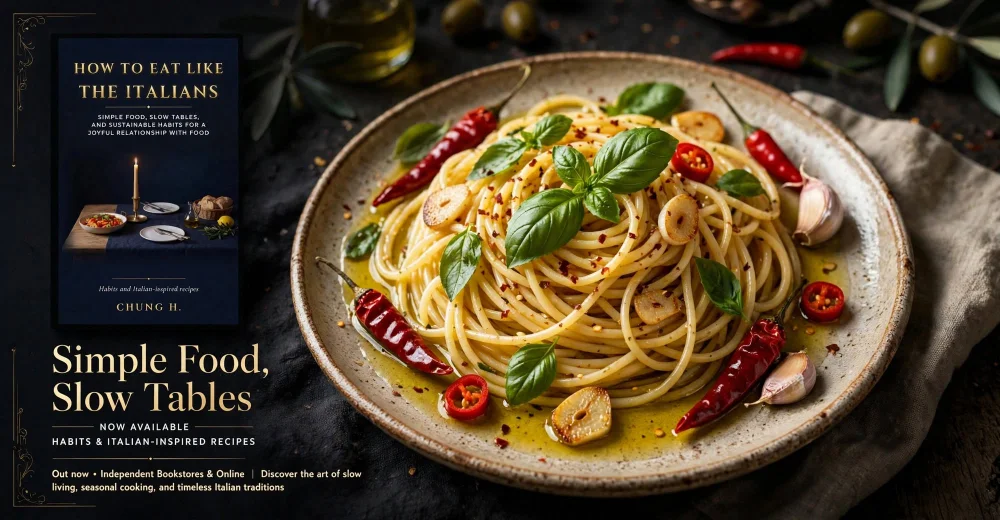
That philosophy is also what inspired my book, How to Eat Like the Italians: Simple Food, Slow Tables, and Sustainable Habits for a Joyful Relationship with Food.
I wrote it for people who want to explore Italian-inspired cooking and food culture without another restrictive diet, calorie-counting system, or promise of rapid transformation. It combines practical everyday habits, cultural context, and 36 simple recipes, while recognizing that there is no single way to eat that works for everyone.
Ultimately, the aim is not to eat exactly like someone else. It's to build a relationship with food that feels nourishing, enjoyable, and realistic in your own life.
I'm curious: what's one small habit that has made your own relationship with food more enjoyable?If you'd like to explore these ideas further, my book, How to Eat Like the Italians: Simple Food, Slow Tables, and Sustainable Habits for a Joyful Relationship with Food, brings together Italian-inspired food traditions, practical everyday habits, and 36 simple recipes. It's designed for readers who want a more relaxed, flexible, and enjoyable relationship with food—not another restrictive diet.
You can find the book here: https://a.co/d/0cQg0DzN