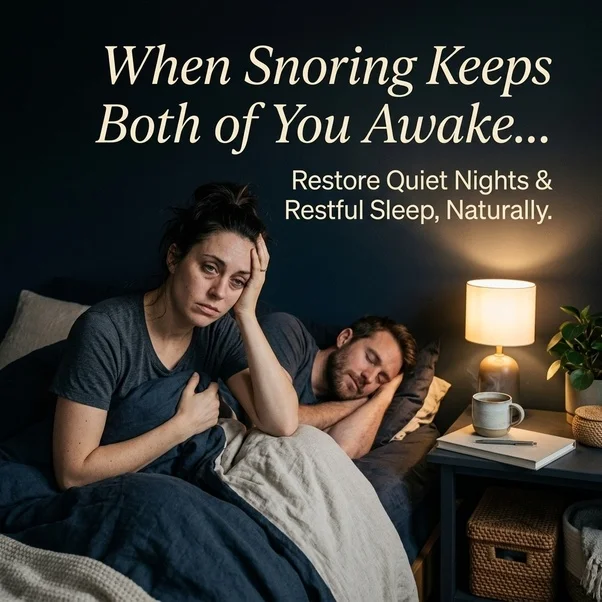
Snoring is common, but it should not always be dismissed as a simple nighttime annoyance. The sound occurs when airflow is partly restricted through the nose or throat during sleep. As relaxed tissues vibrate, they produce the familiar sound of snoring.
Occasional snoring may be related to a cold, allergies, nasal congestion, alcohol, sleeping on the back, or lack of sleep. However, loud or frequent snoring can sometimes be associated with obstructive sleep apnea, a condition in which breathing repeatedly becomes restricted or stops during sleep.
Why do people snore?
Several factors can contribute to snoring:
Sleeping on the back.
Nasal congestion or allergies.
Alcohol consumption before bedtime.
Excess body weight.
Enlarged tonsils or other throat tissues.
A naturally narrow airway.
Sleep deprivation.
Changes in the soft palate or the structure of the nose and throat.
Snoring does not necessarily mean that a person has sleep apnea. However, the risk deserves attention when snoring is loud, persistent, or accompanied by other symptoms.
Signs that should not be ignored
Speak with a qualified healthcare professional if you or your partner notice:
Breathing pauses during sleep.
Gasping, choking, or snorting at night.
Strong daytime sleepiness.
Morning headaches or dry mouth.
Difficulty concentrating.
Restless sleep.
High blood pressure.
Snoring that regularly disrupts your sleep or your partner’s sleep.
These signs may indicate sleep apnea and may justify a professional assessment or sleep study.
Simple habits that may help
Depending on the cause, several everyday changes may reduce occasional snoring:
Try sleeping on your side rather than on your back.
Keep the bedroom air comfortable and address persistent nasal congestion.
Avoid alcohol close to bedtime.
Maintain a regular sleep schedule.
Discuss weight management with a healthcare professional if appropriate.
Do not rely on untested products that promise to permanently “cure” snoring.
These measures may help some people, but they do not replace medical evaluation when symptoms suggest sleep apnea.
A traditional Chinese medicine perspective
Traditional Chinese medicine approaches snoring through patterns involving breathing, congestion, sleep, digestion, and overall balance. Depending on the individual, traditional practices may include acupressure, acupuncture, herbal traditions, breathing exercises, dietary adjustments, and lifestyle recommendations.
Some reviews have reported possible benefits of acupuncture for measures associated with obstructive sleep apnea, but researchers also note the need for stronger, higher-quality studies. These approaches should therefore be considered complementary—not a guaranteed cure and not a replacement for diagnosis or treatment recommended by a healthcare professional.
The important message
Snoring may be minor, but it can also be a sign that breathing is being restricted during sleep. If snoring is accompanied by pauses in breathing, gasping, choking, or significant daytime tiredness, seek professional advice rather than treating the symptom alone.
For readers interested in traditional Chinese perspectives, practical wellness habits, and the limits of natural remedies, discover:
Traditional Chinese Remedies for Snoring
What May Help—and What Cannot “Cure” It
👉 Read the book on Amazon:
[PASTE YOUR AMAZON BOOK LINK HERE]
This article is for educational purposes only and is not medical advice. Traditional remedies should not replace professional diagnosis or treatment. If you suspect sleep apnea, consult a qualified healthcare professional.
Social media version
Do you snore—or does someone in your household?
Snoring can be caused by nasal congestion, sleep position, alcohol, relaxed throat tissues, or other factors. But loud snoring accompanied by breathing pauses, gasping, choking, or daytime sleepiness may be a sign of sleep apnea.
My new book, Traditional Chinese Remedies for Snoring, explores traditional Chinese perspectives, acupressure, acupuncture, lifestyle habits, and what natural approaches can—and cannot—do.
Read it on Amazon:
Traditional Chinese Remedies for Snoring: What May Help—and What Cannot "Cure" It
Traditional Chinese Remedies for Snoring: What May Help—and What Cannot "Cure" It