
Beyond the Storm: Naresh Nandam on Hope, Freedom, and His Spiritual Thriller The Amber Scroll
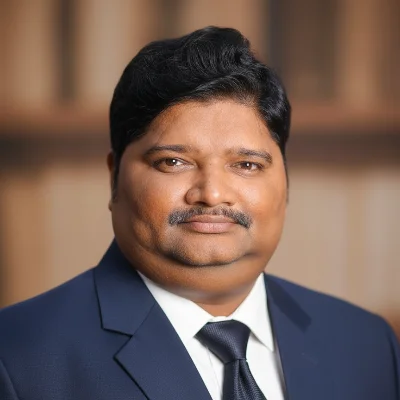
What inspired you to start writing?
I have always been fascinated by the deeper questions that shape human life: Why do people suffer? What gives us the strength to continue when circumstances seem hopeless? And can hope be rational in a world filled with uncertainty?
For me, storytelling offers a powerful way to explore these questions without reducing them to simple answers. I wanted to create a story that combines the suspense of a thriller with a deeper philosophical and spiritual inquiry. Rather than simply discussing hope, faith, freedom, and human resilience, I wanted to place characters in situations where they would have to make difficult choices and pay a real price for their convictions.
That desire eventually became The Amber Scroll.
Can you tell us a little about your latest book?
The Amber Scroll is a contemporary spiritual thriller about the hidden conflict between human freedom and the desire for perfect control.
The story follows Aarav Shah, a historian who has spent fifteen years documenting humanity's darkest moments in what he calls his Chronicle of Despair. When he discovers a mysterious amber fragment that challenges everything he believes, he is drawn into a conflict involving the Silent Order, a powerful organization determined to eliminate human suffering by eliminating human choice.
With his sister Sema, an artist whose faith and compassion become unexpected sources of strength, Aarav must uncover the truth encoded in the fragments of the ancient Amber Scroll before the Order's global plan reaches its final stage.
At its heart, the book explores a question that I find deeply compelling: What if the pursuit of absolute safety ultimately destroys the very things that make us human?
I wanted to challenge the assumption that protection means being spared every storm. Perhaps true protection is not an invisible shield that prevents pain, but the inner strength to face uncertainty without surrendering our freedom, compassion, or sense of purpose.
The novel combines suspense, speculative elements, spiritual symbolism, and philosophical conflict to explore what it means to remain human in a world increasingly tempted by control.
How do you create your characters?
The Amber Scroll is a contemporary spiritual thriller about the hidden conflict between human freedom and the desire for perfect control.
The story follows Aarav Shah, a historian who has spent fifteen years documenting humanity's darkest moments in what he calls his Chronicle of Despair. When he discovers a mysterious amber fragment that challenges everything he believes, he is drawn into a conflict involving the Silent Order, a powerful organization determined to eliminate human suffering by eliminating human choice.
With his sister Sema, an artist whose faith and compassion become unexpected sources of strength, Aarav must uncover the truth encoded in the fragments of the ancient Amber Scroll before the Order's global plan reaches its final stage.
At its heart, the book explores a question that I find deeply compelling: What if the pursuit of absolute safety ultimately destroys the very things that make us human?
I wanted to challenge the assumption that protection means being spared every storm. Perhaps true protection is not an invisible shield that prevents pain, but the inner strength to face uncertainty without surrendering our freedom, compassion, or sense of purpose.
The novel combines suspense, speculative elements, spiritual symbolism, and philosophical conflict to explore what it means to remain human in a world increasingly tempted by control.
What does your typical writing day look like?
My approach to writing is shaped by the need to balance the story's immediate action with its underlying ideas. A thriller must maintain momentum, but its philosophical themes also need enough space to develop naturally through the characters and their decisions.
When working on a story, I pay attention to the structure of the plot, the motivations behind each character's actions, and the questions I want readers to carry with them after a scene ends.
I also look at how individual scenes contribute to the larger narrative. A revelation, a confrontation, or even a quiet conversation should either move the story forward, deepen our understanding of a character, or strengthen the central theme.
For me, the challenge is to make the ideas feel like an organic part of the story rather than a lecture inserted into the narrative. The suspense must work on its own, while the deeper questions give the experience another dimension.
What has been the most rewarding part of being an indie author?
The most rewarding part is the creative freedom to pursue a story on my own terms.
As an independent author, I can bring together genres and ideas that do not always fit neatly into a single category. The Amber Scroll combines elements of a spiritual thriller, speculative fiction, psychological conflict, and philosophical exploration. I wanted to let those elements work together without losing the pace and tension of the story.
Indie publishing also makes the relationship between the author and the reader especially meaningful. The book can reach people who might connect with its questions about hope, faith, freedom, and the human desire for certainty.
Ultimately, I want readers to enjoy the thriller while also finding something in it that stays with them after they finish reading. Being able to pursue that vision independently is deeply rewarding.
What’s one challenge you’ve faced in your writing journey?
One of the biggest creative challenges in writing The Amber Scroll was balancing philosophical depth with the demands of a fast-moving thriller.
The novel deals with questions that have no easy answers: Why does suffering exist? Is freedom worth the uncertainty it brings? Can a society justify controlling individual choices if it promises to make everyone safer?
These questions could easily overwhelm a story if they were presented only through dialogue or exposition. I wanted readers to experience them through suspense, moral dilemmas, personal sacrifices, and the changing relationship between Aarav and Sema.
Another challenge was making the antagonist's vision believable. Malak is not simply interested in power for its own sake; he believes that perfect order can eliminate suffering. His philosophy becomes disturbing precisely because it begins with an objective many people would consider desirable.
The challenge was to show how a seemingly compassionate goal can become destructive when it demands the elimination of human choice.
Do you have any favorite writing tools or apps?
I prefer to focus on tools that help me organize ideas, develop the manuscript, and maintain consistency throughout the story. For a novel with multiple characters, interconnected plotlines, and recurring symbols, keeping track of the larger narrative is as important as refining individual passages.
However, I believe the most important tools are the ones that help an author think clearly about the story. Software can make writing and editing more convenient, but it cannot replace a strong central idea, a convincing character, or the judgment required to decide what belongs in a book.
For me, the objective is always to ensure that the tools serve the story rather than allowing the process to become more important than the finished work.
What advice would you give to new or aspiring indie authors?
Start with a story or question that genuinely matters to you. You will need that connection when the writing becomes difficult, when revisions take longer than expected, or when the response to your work is uncertain.
At the same time, passion alone is not enough. Learn the craft of storytelling. Understand character development, narrative structure, pacing, dialogue, and editing. A compelling idea must still become a book that readers can follow and enjoy.
I would also encourage aspiring authors to finish their manuscripts, revise them honestly, and pay attention to the reading experience. Do not become so attached to an idea that you stop questioning whether it works on the page.
Finally, understand that publishing is not the end of the journey. Independent authors must also think about presentation, discoverability, audience engagement, and promotion. Build those skills gradually, remain open to learning, and focus on producing work that you can stand behind.
Most importantly, do not wait for perfect confidence before beginning. Sometimes the only way to discover what a story can become is to write it.
How do you handle book promotion as an indie author?
I see promotion as an extension of the storytelling process. A book needs more than availability; readers need a reason to become curious about it.
With The Amber Scroll, I want the promotional message to communicate both the thriller's suspense and its deeper questions. The conflict between hope and control, the promise of perfect safety, and the importance of human freedom provide natural starting points for conversations with potential readers.
I also see opportunities to use visual storytelling, short promotional content, character-focused material, and discussions around the novel's themes to introduce the book to different audiences.
For an independent author, consistency matters. Promotion is not simply about announcing a book once; it is about helping readers discover what makes it distinctive and giving them multiple reasons to explore it.
My goal is to reach readers who enjoy suspense but also appreciate stories that invite them to think beyond the final plot twist.
What’s next for you? Are you working on a new book?
The ending of The Amber Scroll deliberately leaves room for the journey to continue. Aarav's transformation from a historian of despair into someone who recognizes the power of human choice marks the beginning of a different way of understanding history.
The manuscript introduces this next direction through Aarav's new work, The Unwritten Chronicle: A History of the Human Choice. It reflects a central idea that runs throughout the novel: history is not only a record of what people have done, but also a testament to the choices they have made.
That idea offers exciting possibilities for further storytelling. The defeat of an obvious system of control does not mean that the struggle for human freedom is over. Apathy, indifference, and the temptation to surrender responsibility can be just as consequential.
I am interested in exploring what happens after a great victory, when people must decide whether they will continue to defend the values that made that victory possible. For me, that is one of the most compelling questions the novel leaves behind.
Where can readers find your published books?
Readers can find The Amber Scroll on Amazon India.
Purchase link: https://www.amazon.in/Amber-Scroll-Naresh-Nandam/dp/9374067447
If you enjoy spiritual thrillers, speculative fiction, psychological conflict, and stories that explore the relationship between hope, freedom, and human resilience, I invite you to discover The Amber Scroll.
I hope readers come away not only entertained by Aarav and Sema's journey, but also reflecting on a question at the heart of the book: What if true protection is not the ability to avoid every storm, but the strength to sail through it without losing ourselves?