Menopause Is a Transition, Not a Defeat: Exploring Chinese Medicine and Everyday Self-Care
There is something unsettling about feeling unfamiliar in your own body. A night of broken sleep can change the shape of the following day. A sudden wave of heat can interrupt an ordinary moment. When energy and concentration feel unpredictable, even familiar routines can begin to feel demanding.
Menopause deserves a conversation that makes room for these experiences without reducing a woman to a list of symptoms. It also deserves an approach to self-care that feels supportive rather than like another full-time job.
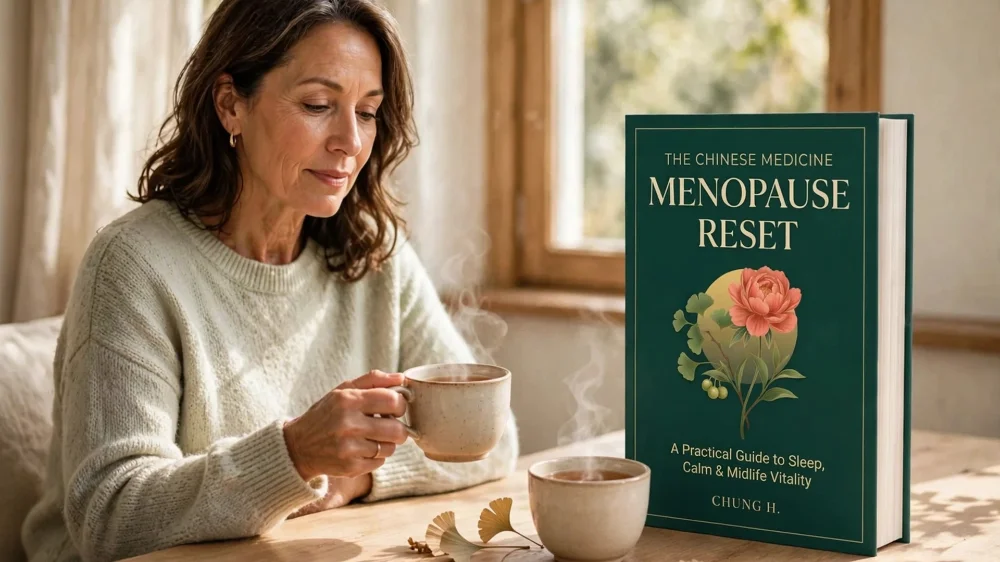
That is the perspective behind The Chinese Medicine Menopause Reset: Balance Hormones, Restore Sleep & Reclaim Energy with Ancient Eastern Wisdom, by Chung H., part of the Eastern Women's Wisdom series.
The book introduces a traditional framework for thinking about this stage of life, alongside practical exercises, reflection tools, and a structured 14-day plan.
A Different Framework for Reflection
Traditional Chinese Medicine has its own language for describing the body. In this book, concepts such as Yin, Yang, and Kidney patterns provide the foundation for exploring menopausal experiences.
Readers do not need to arrive with specialist knowledge. The guide introduces these ideas through everyday concerns such as hot flashes, restless nights, fatigue, and changes in concentration.
The purpose is to make an unfamiliar tradition more approachable. Rather than presenting its terminology as something to memorize, the book connects it to questions readers can explore: What feels most difficult right now? Which routines feel nourishing? Where could a little more rest or consistency fit into the day?
From Reading to a Daily Routine
A wellness book can be interesting without making it clear what to do next. The Chinese Medicine Menopause Reset addresses that gap with a 14-day plan organized around morning, midday, and evening practices.
The emphasis is on turning ideas into a manageable rhythm. Readers can explore the structure, notice what feels realistic, and use the accompanying tools to reflect on their experience.
The book includes:
- A traditional Chinese medicine framework for understanding menopausal patterns.
- Food ideas, recipes, and herbal teas.
- At-home acupressure instructions.
- An introduction to Chinese herbs discussed in menopausal support.
- Five Qi Gong exercises.
- An evening ritual and daily routine template.
- A symptom tracker, pattern self-assessment, and quick-start checklist.
Together, these sections offer several ways to engage with the material, whether through movement, writing, food preparation, or quiet reflection.
Making Room for Observation
One of the book's practical features is its combination of a symptom tracker and a daily routine template.
These pages invite readers to move beyond a general impression of having a difficult week and record the details of their own experience. They also create a place to reflect on which practices fit comfortably into daily life and which ones may need adjusting.
The approach does not have to be all or nothing. A reader might begin with the evening section, explore one Qi Gong exercise, or spend time with the introductory chapters before following the complete plan.
A Book to Explore, Not Another Standard to Meet
Self-care can easily become another source of pressure. A plan may look appealing on paper yet feel impossible alongside work, family, and ordinary responsibilities.
This book's invitation is to approach menopause with curiosity and care rather than a sense of personal failure. Its combination of traditional concepts and practical tools gives readers a starting point for exploring a different perspective on this transition.
The central message is one of possibility: this chapter of life deserves attention, nourishment, and a thoughtful conversation about what comes next.
The Chinese Medicine Menopause Reset by Chung H. is available in paperback as part of the Eastern Women's Wisdom series.
This article introduces the book and its traditional framework. It does not establish that the practices described balance hormones or treat menopausal symptoms, and it is not medical advice.